15 Essential Jamaican Patois Phrases Everyone Should Know
Unlock Jamaica’s culture and connections with these 15 vibrant, everyday Patois phrases and their real-life meanings explained.

Jamaican Patois, locally known as Patwa, is a colorful creole that captures Jamaica’s rich history and enduring spirit. Whether you’re planning a trip to the island or simply want to understand its vibrant culture, mastering these foundational phrases will instantly help you connect with Jamaican people and bring a deeper authenticity to your experience.
Table of Contents
- Introduction to Jamaican Patois
- Greetings and Everyday Expressions
- Expressing Feelings and Wellbeing
- Making Requests and Seeking Help
- Food and Dining Phrases
- Shopping, Bargaining, and Etiquette
- Gratitude and Farewell Expressions
- Tips on Pronunciation
- Jamaican Patois Etiquette
- Frequently Asked Questions
Understanding Jamaican Patois
Patois is not just an accent—it is a dynamic fusion of English, West African languages, Spanish, and other influences shaped by centuries of Jamaican culture. While derived primarily from English, Patois boasts its own unique grammar, expressions, and rhythm. It is widely spoken throughout Jamaica and is a key piece of local identity, heard in reggae lyrics, street markets, and daily greetings. Using even a few common Patois words is seen as a respectful gesture and often elicits warm responses from locals.
1. Greetings and Everyday Expressions
Start every interaction on the right note with these foundational greetings:
- Wah gwaan? (Pronounced: Wah-gwaan)
Meaning: “What’s going on?” or “What’s up?” This is one of the most common and friendly greetings in Jamaica, used with friends, family, or even strangers as an icebreaker. - Mi deh yah. (Pronounced: Mi deh-yah)
Meaning: “I’m here” or “I’m good.” Often used in reply to “Wah gwaan?”, it’s the equivalent of “I’m fine, thanks.” Friendly and humble, it’s used every day among Jamaicans. - Respect.
Meaning: A universal way to say “Thank you” or to show appreciation and gratitude. In Jamaica, giving someone “respect” means you acknowledge, thank, or salute them. - Ya mon.
Meaning: “Yes” or “Absolutely.” This phrase confirms agreement and is one of Jamaica’s most recognizable catchphrases worldwide.
2. Expressing Feelings and Wellbeing
- Everyting irie.
Meaning: “Everything is alright.” or “All is well.” The word “irie” captures the sense of happiness, peace, or contentment that permeates the Jamaican spirit. - Bless up.
Meaning: “Be blessed” or “Take care.” Used as both a greeting and a farewell, it’s a way of wishing someone positivity and good fortune. - Big up yuhself.
Meaning: “Give yourself some respect” or “Take pride.” This phrase is a way to praise or congratulate someone for their accomplishments or simply for being themselves.
3. Making Requests and Seeking Help
- Mi soon come.
Meaning: “I’ll be right back.” Used to let someone know you’ll return soon, though in local context, “soon” may be flexible and represent a laid-back sense of time. - Small up yuhself.
Meaning: “Make some room” or “Excuse me.” Used if you need to squeeze by someone or make space, especially in crowded places. - Yuh can help mi?
Meaning: “Can you help me?” A straightforward and polite way to seek help from locals.
4. Food and Dining Phrases
No experience of Jamaica is complete without sampling its legendary cuisine! These phrases will help you order food and show your appreciation:
- Mi waan some jerk chicken.
Meaning: “I want some jerk chicken.” Use “mi waan” followed by your dish of choice to place an order or express a craving. - Dis taste good!
Meaning: “This tastes good!” Use it to compliment the chef or show gratitude if you’re invited for a meal. - Mi belly full.
Meaning: “I’m full.” Use this to politely refuse more food or signal you’ve eaten enough.
5. Shopping, Bargaining, and Etiquette
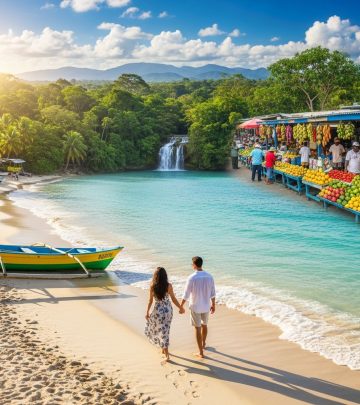
Markets and street vendors are everywhere in Jamaica, bursting with color and activity. Here’s how to interact gracefully:
- How much fi dis?
Meaning: “How much is this?” Essential for shopping in markets or with street vendors. - Mi can get a likkle discount?
Meaning: “Can I get a little discount?” Polite haggling is common—just ask with a smile. - Nuh worry yuhself.
Meaning: “Don’t worry about it.” Use this to convey patience or let someone know it’s alright if there’s a delay or hiccup in service.
6. Gratitude and Farewell Expressions
- Walk good.
Meaning: “Take care” or “Goodbye.” A warm way to say farewell, wishing someone well on their journey. - Likkle more.
Meaning: “See you later” or “Goodbye for now.” Informal and friendly, it’s a casual way to finish conversations with friends or acquaintances.
Summary Table: Key Jamaican Patois Phrases
| Phrase | Pronunciation | Meaning | Use Case |
|---|---|---|---|
| Wah gwaan? | Wah-gwaan | What’s going on? | Greeting |
| Mi deh yah | Mi deh-yah | I’m here (I’m good) | Reply to greeting |
| Respect | Respect | Thank you/Appreciation | Expressing gratitude |
| Everyting irie | Eh-vry-ting I-ree | All is good | Positive affirmation |
| Mi soon come | Mi soon come | I’ll be right back | Temporary absence |
| Ya mon | Ya mon | Yes/Absolutely | Agreement |
| Small up yuhself | Small up yuh-self | Make some room | In crowded spaces |
| Bless up | Bless up | Take care/Be blessed | Greeting/Farewell |
| How much fi dis? | How much fi dis | How much is this? | Shopping |
| Likkle more | Likkle more | See you later | Farewell |
7. Tips on Pronunciation
Patois spelling tends to be phonetic, so words are pronounced how they are written in Patois, not English. Here are a few quick guides:
- “Wah” is like “wah” in “water”
- “Mi” is “me”
- “Deh” means “there”
- “Yah” means “here”
- “Yuh” is “your” or “you”
- “Likkle” is “little”
Practice listening to locals and don’t be afraid to join in—Jamaicans appreciate when visitors try, regardless of any minor mistakes.
8. Jamaican Patois Etiquette
Using Patois is not just about the words; it’s about showing respect for Jamaican culture. Keep these cultural pointers in mind:
- Smile and be genuine: Your willingness to try Patois will be warmly received, especially if you show friendliness.
- Use polite phrases: “Respect,” “Bless up,” and “Walk good” convey warmth and care.
- Embrace the relaxed pace: Time works differently in Jamaica. If someone says “mi soon come,” don’t expect strict punctuality — it’s about flexibility!
- Don’t force it: Use Patois organically. If someone replies in English, follow their lead.
Frequently Asked Questions (FAQs)
Q: Is it rude for visitors to try speaking Jamaican Patois?
No, it is not considered rude—quite the opposite! It is seen as a sign of respect and interest in the culture. Even if your pronunciation is imperfect, locals appreciate your effort and usually respond with encouragement and smiles.
Q: Do Jamaicans always speak in Patois, or do they use English as well?
Both are commonly used. English is the official language, especially in formal settings, but Patois is widely spoken in everyday interactions, music, and at home.
Q: What’s the most important phrase to learn before visiting Jamaica?
“Wah gwaan?” is arguably the most common and friendliest greeting. Start with this and “Mi deh yah,” and you’ll be well on your way to connecting with locals.
Q: How else can I show respect while traveling in Jamaica?
Be polite, greet people with a friendly smile, and try out simple phrases like “Respect” and “Bless up.” Observing local customs and treating everyone with kindness goes a long way.
Q: Will I need to know Patois to get around Jamaica?
No, English speakers will have no trouble navigating Jamaica, but learning a few Patois phrases will certainly enhance your experience and may open doors to more meaningful, memorable interactions.