11 Fascinating Things You Never Knew About Panama
Discover curious facts about Panama, from its unique geography and culture to myths, wildlife, and world-changing innovations.

Panama enchants with its contrasts and surprises, blending centuries-old traditions with modern marvels and a dazzling natural landscape. From tales of pirates to world-changing engineering feats, Panama offers a treasure trove of stories, cultures, and curiosities that go far beyond its world-famous canal. Here are 11 surprising facts that reveal why this small Central American country holds such a unique place in the world.
1. Panama Is the Narrowest Part of the Americas
Geographically, Panama stands as the slender land bridge connecting North and South America. At its narrowest point, it is just about 50 kilometers (31 miles) wide, meaning you can travel from the Pacific Ocean to the Caribbean Sea in under two hours in some places. This unique location is not only a traveler’s delight—it made possible one of the world’s most ambitious engineering projects: the Panama Canal. The country is thus often called the “Crossroads of the Americas,” as both continents are literally connected by this tiny isthmus.
2. The Only Place Where You Can See the Sun Rise on the Pacific and Set on the Atlantic
Because of Panama’s distinctive S-shape, there are select spots on the isthmus where you can witness the sun rise over the Pacific Ocean and set over the Atlantic (Caribbean Sea) in the same day. This phenomenon is rare worldwide and is a favorite boast among Panamanians and seasoned travelers alike.
- Certain viewpoints in the Darién province and highlands near the city of Chepo provide the best opportunities for this extraordinary experience.
- Visitors have used this unusual geographical orientation to plan “sunrise-sunset” day trips—a truly memorable adventure!
3. The Panama Canal Changed the World
The Panama Canal is one of humanity’s most significant feats of engineering, effectively re-routing global trade and maritime navigation. Opened by the United States in 1914, the canal allows ships to travel between the Atlantic and Pacific Oceans without the long, perilous journey around the tip of South America.
- The construction involved a monumental human and technical effort, with tens of thousands of laborers from around the world working in grueling conditions.
- Today, the canal handles roughly 6% of all global maritime trade, supporting economies far beyond Panama’s borders.
- The canal was fully handed back to Panamanian control in 1999, a moment of immense national pride celebrated annually on December 31.
4. Panama’s Flag Has a Unique History
The Panamanian flag is filled with symbolism and has a colorful tale behind its creation. Designed shortly before independence from Colombia, it comprises four quadrants: two white (representing peace), a blue star (representing purity and honesty), and a red star (representing authority and law). The flag was secretly sewn by María Ossa de Amador in 1903, just in time for the declaration of independence and the formation of the new nation.
- Each color and star represents Panama’s political history and aspirations for unity and peace.
- Its unveiling marked the birth of the Republic of Panama as a sovereign state.
5. Home to Hundreds of Islands
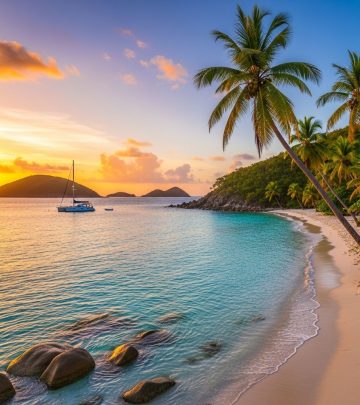
Despite its narrow width, Panama boasts an astonishing more than 1,400 islands scattered across both its Pacific and Caribbean coasts. Some of the most celebrated include:
- San Blas Islands: A constellation of nearly 400 islands, home to the indigenous Guna (Kuna) people and renowned for their pristine beauty.
- Isla Coiba: A UNESCO World Heritage Site teeming with rare wildlife and surrounded by coral reefs.
- Pearl Islands: Famous for their white-sand beaches and historical connections to pirates and Spanish explorers.
- Taboga Island: Known as the “Island of Flowers,” it’s a quick ferry ride from Panama City and a popular weekend escape.
6. Biological Bridge and Biodiversity Hotspot
Panama’s position as a land bridge has created one of the world’s greatest biodiversity hotspots. It’s home to an incredible variety of species drawn from both North and South America, as well as endemic flora and fauna unique to the region.
- More than 970 species of birds have been recorded, including the rare harpy eagle, Panama’s national bird.
- The Panama Rainforest within the city limits of Panama City is among the most accessible tropical forests in the world.
- Wildlife enthusiasts can spot monkeys, sloths, jaguars, tapirs, and hundreds of amphibian and reptile species, often within a short drive of the capital.
7. A Cultural Tapestry: Panamanians Celebrate Diversity
Panama’s culture is a rich tapestry, woven from Indigenous roots, Afro-Caribbean heritage, Spanish colonial influences, and waves of immigrants from around the globe. Over the past 150 years, the construction of the railroad and the canal brought Chinese, Indian, French, and West Indian laborers whose descendants now enliven the nation’s cuisine, music, and traditions.
- The mola: These vibrant textiles, hand-made by the Guna people, are sought-after souvenirs and cultural icons.
- Panama City’s neighborhoods pulse with Afro-Panamanian rhythms, Chinese markets, and Spanish colonial architecture.
- Annual festivals, such as Carnival and the Festival de la Mejorana, are a riot of color, dance, and pageantry that pridefully display Panama’s multicultural heritage.
8. Pirates, Legends, and Hidden Gold
Panama’s strategic position has made it a target for treasure-hunters, pirates, and empires for centuries. It was the route for transporting South American gold to Spain, making cities like Portobelo and Panama Viejo frequent targets for infamous pirates such as Henry Morgan.
- Legend persists that vast treasures—some still undiscovered—remain hidden in the jungles and ruins of Panama Viejo and along the Caribbean coastline.
- The crumbling forts at Portobelo and San Lorenzo, now UNESCO World Heritage Sites, hint at the drama and violence of those centuries.
9. Panama Has No National Army
Panama is one of the few countries in the world without a standing national army. In 1990, following the U.S. invasion and the ousting of military dictator Manuel Noriega, Panama abolished its army and placed a premium on civilian rule and internal security. Today, the Public Forces of Panama handle external and internal security, and the country enjoys remarkable political stability compared to many neighbors.
10. The Birthplace of New Species and Living Fossils
Panama’s unique geography fosters exceptional evolution and natural discovery. The country’s tropical ecosystems have produced “living fossils” and an unusually large number of new species discoveries by scientists in recent decades.
- The golden frog (Atelopus zeteki), an endangered amphibian, is a symbol of Panama and the focus of major conservation efforts.
- The Smithsonian Tropical Research Institute, headquartered in Panama, is at the forefront of new discoveries, with recent years yielding dozens of new wildlife, plant, and insect species in Panama’s rainforests and marine environments.
11. World-Influencing Innovations—and Famous Hats
Most people associate the Panama hat with this country, but it actually hails from Ecuador. The hat became known as the “Panama hat” after workers on the canal and even President Theodore Roosevelt were photographed wearing them during the canal’s construction. The name stuck—today’s visitors will find them everywhere in souvenir shops.
- Panama has also been a pioneer in offshore banking and international finance, giving the country an outsized influence on the global economy.
- The country’s free trade zones and the Panama Canal Authority draw business and investment from every continent.
- Panama’s historic Casco Viejo district is a UNESCO World Heritage Site and a center for art, culture, and nightlife in Central America.
Frequently Asked Questions (FAQs)
Q: Is English widely spoken in Panama?
A: Spanish is the official language, but English is commonly spoken in Panama City, business areas, and tourist zones. Many Panamanians are multilingual due to the country’s international ties and history.
Q: What is Panama most famous for?
A: The Panama Canal is the country’s most iconic symbol, but Panama is also known for its rich biodiversity, multicultural society, and being the natural passageway between continents.
Q: Are there unique animals I can see only in Panama?
A: Yes. Panama is home to unique species like the golden frog, harpy eagle, and many endemic reptiles and amphibians discovered in its rainforests and islands.
Q: How safe is Panama for travelers?
A: Panama is one of the safest countries in Central America, especially in urban and touristic areas. Like all destinations, travelers should use common sense and remain aware of their surroundings.
Q: Can you really see both oceans at once in Panama?
A: While you can’t see both the Pacific and Atlantic at the same moment from a single standing point, you can traverse between them quickly and, in rare cases, see the sun rise on one and set on the other within hours on a clear day.