
Ravioli alla Sorrentina: A Classic From Italy’s Amalfi Coast
Bringing the sun-kissed flavors of Sorrento to your table with pillowy ricotta-filled ravioli in a vibrant tomato-basil sauce.
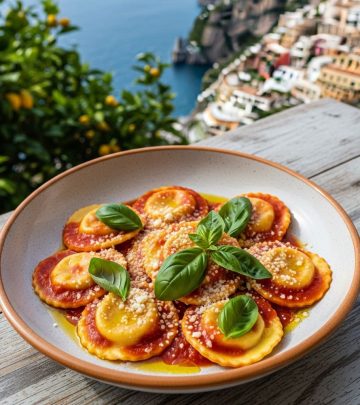
Ravioli alla Sorrentina: A Glimpse Into the Heart of Campania
Nestled along the sun-drenched cliffs of the Amalfi Coast, Sorrento’s culinary tradition embodies the simplicity and vibrancy of southern Italy. Ravioli alla Sorrentina is one of its most iconic dishes: soft, homemade ravioli stuffed with creamy ricotta, bathed in a caramelized cherry tomato sauce, and finished with basil and aged cheese. This dish is more than just pasta; it’s a celebration of Campanian ingredients and convivial culture—a meal that brings family and friends together around the table.
Table of Contents
- Origins and History
- Ingredients Required
- Step-by-Step Instructions
- Tips for Success
- Frequently Asked Questions
- Serving Suggestions
The Origins and Cultural Significance of Ravioli alla Sorrentina
Sorrento, a coastal gem in the Campania region, is famed for its sweet, low-acid San Marzano tomatoes, lush basil, and renowned mozzarella—often made from local buffalo milk. The alla Sorrentina style combines these ingredients in comforting, oven-baked or sautéed pasta dishes. While gnocchi alla sorrentina is perhaps the most widely recognized version, this ravioli variant showcases the same region-defining flavors in delicate pasta packages filled with ricotta and aged cheeses.
Sorrento’s cuisine cherishes freshness: the flavors of the land and sea, the richness of the cheese, and the sun-ripened tomatoes. Food is central to social gatherings, from family dinners to festive feasts in the local trattorie.
Ravioli: A Medieval Legacy
Ravioli as a filled pasta date back to Italy’s Middle Ages, with each region crafting its unique versions shaped by local produce. The Sorrentine approach emphasizes restraint and clarity, letting every ingredient shine without unnecessary embellishment.
Ingredients: The Foundations of Ravioli alla Sorrentina
- 350g (about 3 cups) ’00’ flour or all-purpose flour – for supple, silky pasta sheets
- 50g (1/4 cup) semolina (or semola rimacinata) flour – gives the dough structure and bite
- 225g eggs (about 4 whole eggs plus 1 yolk) – binds the dough, adds richness
- Semolina flour, polenta, or coarse cornmeal – for rolling and dusting
- 16 oz (2 cups) whole-milk ricotta – the creamy base for the filling
- 3 oz (3/4 cup) caciotta campana or Monterey Jack cheese, grated – mild, melts easily
- Generous Parmigiano-Reggiano or Grana Padano – sharp, nutty notes in the filling and on top
- 1 tbsp fresh marjoram (optional) – aromatic herbal complexity
- 1 splash freshly squeezed lemon juice – brightens the filling
- Salt and pepper – to bring out flavors
- For the sauce:
- 6 tbsp unsalted butter, divided (or half as much fine olive oil)
- 4 garlic cloves, minced
- 16 oz sweet cherry tomatoes (like San Marzano or similar)
- 12 oz (1.5 cups) tomato passata
- Salt and pepper
- Fresh basil leaves – garnish
Ingredient Tips
- Ricotta: Must be firm and well-drained. If in doubt, gently press it between paper towels.
- Cheese: While caciotta campana is traditional, Monterey Jack provides a mild substitute.
- Tomatoes: Use the ripest, sweetest cherry tomatoes for the most flavor-packed sauce.
- Flour: ’00’ is ideal for a soft, elastic dough, but all-purpose flour is a reliable alternative.
Making Ravioli alla Sorrentina: Step-By-Step Guide
1. Making the Pasta Dough
- By hand (well method): On a flat wooden board, mound the flours and make a deep well in the center. Pour in the whisked eggs. Gradually draw the flour into the eggs with a fork, mixing steadily. When a shaggy dough forms, knead for 5-10 minutes until smooth and elastic.
- By food processor: Place flours and eggs in the bowl; pulse until small beads appear and texture resembles coarse couscous (about 30 seconds). Pour onto a board and knead by hand until smooth.
- Wrap dough tightly in plastic wrap; rest at room temperature for 30 minutes.
2. Preparing the Ricotta Filling
- If your ricotta is watery, place it on a paper towel–lined plate, spread it out, and top with more paper towel. Pat gently to draw out excess liquid. It should be firm, not runny.
- In a food processor, blend ricotta, grated caciotta or Jack, a hefty dose of Parmigiano or Grana Padano, and marjoram if using, until thick and creamy.
- Add a splash of lemon juice, and season with salt and pepper to taste. Pulse again for a perfectly smooth filling.
- Transfer to a piping bag or bowl; refrigerate until needed for easy handling.
3. Rolling Out and Shaping the Ravioli
- Lightly dust your work surface and rolling pin (or pasta machine) with semolina.
- Divide rested dough into manageable pieces (quarter the dough), then roll each out to about 1mm thick for delicate ravioli.
- Lay out a sheet of pasta. Pipe or spoon small mounds of filling (about 1 tsp each), spaced evenly in rows.
- Moisten the dough around each mound lightly with water or egg white (this acts as glue).
- Top with another sheet of dough. Press gently around each mound to seal, ensuring no air pockets remain.
- Using a pasta cutter or knife, portion into squares. Seal edges firmly with your fingers or a fork for the classic look.
- Dust finished ravioli with semolina and cover with a kitchen towel to prevent drying.
4. Making the Sorrentina-Style Tomato Sauce
- Halve the cherry tomatoes; toss with generous salt and let rest 1 hour to concentrate their juices.
- Blend salted tomatoes on high speed until smooth. (Deseeding is optional.)
- In a sauté pan over medium heat, cook minced garlic in 2 tbsp butter (or olive oil) until fragrant but not browned.
- Add the blended tomatoes and tomato passata to the pan.
- Stir to combine, cover, and simmer over medium-low for 15–20 minutes. Sauce will thicken, caramelize, and deepen in flavor. Stir occasionally.
- Finish the sauce with remaining 4 tbsp butter (or olive oil). Season with salt and pepper.
5. Cooking and Serving the Ravioli
- Bring a large pot of water to a rolling boil. Season generously with kosher salt.
- Carefully drop in the ravioli. Boil for 2–3 minutes; the ravioli will float when ready. Taste for doneness.
- Lift ravioli from the pot using a slotted spoon and transfer directly to the tomato sauce. (Add a spoonful or two of pasta water to help emulsify and coat.)
- Gently toss the ravioli in the sauce over low heat for 1–2 minutes, letting the flavors meld and the pasta absorb some sauce.
- Plate immediately, garnishing with fresh basil leaves and a final scattering of Parmigiano.
Tips for Perfect Ravioli alla Sorrentina
- Drain your ricotta well: This keeps the filling luscious, not runny, and prevents leaky ravioli.
- Work with small pieces of dough at a time: Prevents premature drying and cracking.
- Don’t skimp on seasoning: Both the filling and the sauce need enough salt to amplify the natural sweetness and richness of the ingredients.
- Butter matters: Using high-quality butter brings silkiness and depth to the sauce; olive oil gives fruity brightness. Choose based on your preference.
- Avoid overcooking: Fresh ravioli cook fast and can become mushy if left too long in boiling water.
Frequently Asked Questions
Q: Can I make the ravioli ahead of time?
A: Yes. Arrange uncooked ravioli on a semolina-dusted tray in a single layer, cover, and refrigerate up to 8 hours. For longer storage, freeze in a single layer, then transfer to a bag once frozen; boil straight from frozen (add 1 minute to cooking time).
Q: Can I add mozzarella to the filling?
A: Traditionally, mozzarella is used as a topping or added to gnocchi alla sorrentina, not usually to the filling. However, a sprinkle on top before serving creates a creamy, decadent layer.
Q: What’s the difference between Ravioli alla Sorrentina and Gnocchi alla Sorrentina?
A: Both dishes are served in a tomato and cheese sauce. The main difference is the pasta base: potato gnocchi versus filled pasta. Both highlight the region’s signature flavors.
Q: If I don’t have ’00’ flour, can I use all-purpose flour?
A: Absolutely. While ’00’ provides the silkiest texture, all-purpose flour yields excellent results as well.
Q: Can I use different herbs in the filling?
A: Marjoram is traditional but optional; you can substitute with finely chopped basil, parsley, or even lemon zest for brightness.
Serving and Presentation: Bringing Sorrento to Your Table
Ravioli alla Sorrentina is best enjoyed immediately—fresh from the pan, with the cheese melting gently over the pasta and the aroma of basil perfuming the air.
You can serve this dish as a lavish primo piatto (first course) at a dinner party or as the main attraction for a relaxed weekend meal. Pair it with a crisp, mineral-rich white wine from Campania, a loaf of rustic Italian bread, and a simple salad dressed with olive oil and lemon.
Finishing Touches
- Add a final drizzle of high-quality olive oil for shine and aroma just before bringing the dish to the table.
- Grate a bit more Parmigiano or Grana Padano on top for nutty, salty depth.
- Garnish with fresh basil, and if you desire, a few slices of mozzarella or a quick broil to brown the top for an oven-finished effect.
Nutritional and Cultural Reflections
This dish is rich but balanced, offering healthy fats, protein, and the antioxidant benefits of tomatoes and herbs. More than its nutrition, though, it offers a taste of Italian hospitality—a meal meant to linger over, telling stories and soaking up the joy of shared food.
Key Characteristics Table
| Feature | Description |
|---|---|
| Origin | Sorrento, Campania, Italy |
| Pasta Type | Fresh egg ravioli, filled with ricotta & aged cheese |
| Sauce | Cherry tomato & butter (or olive oil) |
| Herbs | Fresh basil, marjoram optional |
| Cheese Topping | Parmigiano or Grana Padano, mozzarella optional |
| Serving Temperature | Hot, just after tossing in sauce |
| Course | First course (primo) or main |
Frequently Asked Questions (FAQs)
Q: Is this recipe vegetarian?
A: Yes, if you use cheeses made without animal rennet. Double-check your Parmigiano or substitute with a vegetarian hard cheese if needed.
Q: Can I make the dough without a pasta machine?
A: Definitely! A rolling pin and a generously floured board are all you need, though be prepared for a good workout to get the dough thin enough.
Q: What goes well with Ravioli alla Sorrentina?
A: Serve with a fresh salad of arugula and lemon, crusty bread, and a dry white wine from the Campania region (like Fiano di Avellino).
Q: I can’t find fresh basil—what can I use instead?
A: A bit of flat-leaf parsley, chopped, makes a workable substitute, though the flavor will shift. Dried basil is less aromatic but may be used in a pinch.
Final Thoughts
Ravioli alla Sorrentina isn’t just a dish—it’s a distillation of Sorrento’s sun, soil, and sea. With its delicate pasta, creamy filling, and vibrant, basil-scented tomato sauce, it offers a taste of the Mediterranean at your own table. Whether you’re recreating memories of a trip to Italy or dreaming of the Amalfi Coast, this classic will transport you there, one bite at a time.









